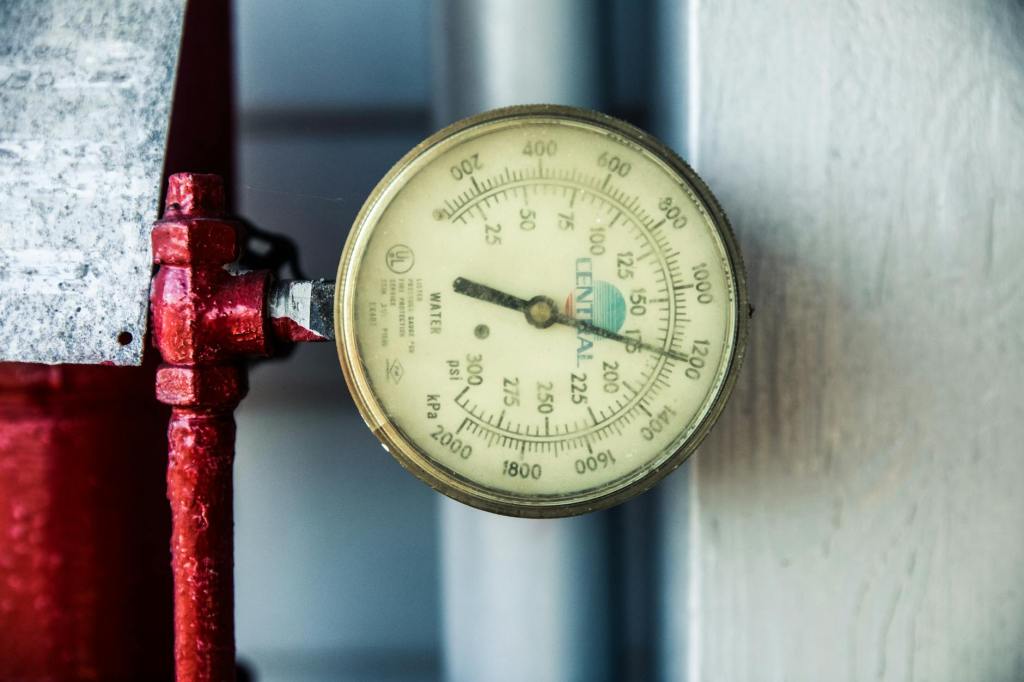
Water reaches every faucet in your home because it is actively pushed through pipes under controlled pressure. This force is carefully generated, regulated, and distributed to ensure water arrives reliably, safely, and at usable flow rates.
Understanding how a home water pressure system works step by step reveals why pressure drops during peak use, why pipes make noise, and what controls water pressure in a home. More importantly, it shows how multiple mechanical and physical processes operate together to deliver consistent performance.
In this guide, you’ll learn:
- Where household water pressure originates
- How pressure is created and stabilized
- The components that control system force
- Why pressure changes during use
- What common pressure problems actually mean
Let’s start with a simple conceptual model before moving into system mechanics.
Water Pressure Explained Like You’re 5
Picture your plumbing system as a road network moving water instead of cars.
- Water = moving vehicles
- Pipes = roads
- Pressure = pushing force
- Pressure regulator = traffic controller
- Pressure tank = backup supply
Water does not move because it “wants” to flow. It moves because pressure pushes it toward areas of lower pressure — like traffic moving from crowded highways to open lanes.
Without pressure:
- Water would not reach upper floors
- Flow would be weak or nonexistent
- Fixtures would not function properly
Too much pressure, however, overwhelms the system. Pipes, seals, and appliances are designed for specific force ranges. Exceeding them accelerates wear and increases failure risk.
At its core, a household system is a controlled-force network designed to move water efficiently without damaging infrastructure.
What Controls Water Pressure in a Home?
Household pressure is the result of coordinated system design — not a single device. It depends on supply conditions, mechanical regulation, and distribution behavior.
1. Water Source
The origin of pressure determines baseline system force.
Municipal supply systems
- Water is stored at elevation in towers or reservoirs
- Gravity generates baseline pressure
- Booster pumps maintain distribution across service areas
A useful rule of thumb: every 2.31 feet of elevation produces roughly 1 psi of pressure.
Private well systems
- Electric pumps actively pressurize water
- Pressure tanks store energy in compressed air
- Pressure switches control pump activation
In both cases, pressure exists before water enters the home.
2. Pressure Generation Mechanisms
Pressure is produced through either gravitational potential energy or mechanical energy.
Elevation-based pressure
Water stored at height possesses potential energy. Gravity converts this energy into force inside pipes. This method is stable and energy-efficient.
Mechanical pumping
Pumps add energy directly to water, increasing pressure instantly. Well systems and municipal boosters rely on this method.
The generation method affects stability, response time, and pressure consistency.
3. Pressure Regulation Devices
Incoming pressure is rarely suitable for direct household use. Regulation ensures safety and consistency.
Pressure Reducing Valve (PRV)
Installed at the main supply entry, this device maintains constant downstream pressure regardless of supply fluctuations. Internally, a spring-loaded diaphragm adjusts valve opening in response to pressure changes.
Pressure Tank (well systems)
Stores pressurized water using compressed air. This prevents frequent pump cycling and stabilizes pressure during short demand bursts.
Regulation transforms raw pressure into usable pressure.
4. Distribution Network
Once regulated, pressure is maintained throughout the internal pipe network.
Key components:
- Main supply trunk
- Branch distribution lines
- Fixture connections
Pressurized water remains stationary until a fixture opens. Flow occurs only when pressure imbalance is created.
This distinction between stored pressure and active flow is fundamental to system behavior.
How Water Pressure Is Created and Maintained
Water pressure systems follow predictable hydraulic principles.
Static vs Dynamic Pressure
Static pressure
- Measured when no water is moving
- Represents stored system energy
Dynamic pressure
- Measured during active flow
- Decreases as water moves and encounters resistance
Every pipe, fitting, and valve introduces friction loss. When multiple fixtures operate, total system resistance increases, lowering dynamic pressure.
Pressure Regulation Mechanics
Pressure regulators function as automatic balancing devices.
When upstream pressure increases:
- Internal spring compression rises
- Valve opening narrows
- Downstream pressure remains stable
When demand increases:
- Downstream pressure drops slightly
- Valve opens to restore target pressure
This continuous adjustment prevents dangerous pressure spikes.
Water Pressure vs Water Flow Explained
Pressure and flow are often confused but represent different physical quantities.
- Pressure = force per unit area (psi)
- Flow = volume per unit time (gallons per minute)
High pressure with restricted pipes produces low flow. Low pressure with wide pipes may still produce moderate flow.
Pipe diameter, length, roughness, and restrictions determine actual flow performance — not pressure alone.
Understanding this distinction is critical for diagnosing system problems accurately.
How a Home Water Pressure System Works Step by Step
The operational sequence is straightforward but highly coordinated.
Step 1 — Water Enters Under External Pressure
Supply pressure originates from a municipal system or well pump.
Step 2 — Pressure Is Stabilized
A PRV or pressure tank adjusts incoming force to a controlled level.
Step 3 — Pressurized Water Fills Distribution Pipes
Pressure is stored throughout the network even when fixtures are closed.
Step 4 — Fixture Activation Creates Pressure Differential
Opening a faucet lowers local pressure, initiating flow.
Step 5 — Water Moves Toward Lower Pressure
Stored energy drives water through pipes to the outlet.
Step 6 — System Rebalances
After the fixture closes, pressure equalizes across the network.
This process explains why water flows instantly when fixtures are opened.
Household Water Pressure in Daily Use
Real-world scenarios illustrate system behavior clearly.
Example 1 — Turning on a Kitchen Faucet
Opening the valve reduces downstream pressure. Stored pressure in the supply line pushes water toward the opening. The regulator maintains safe force regardless of supply variations.
Response time is immediate because energy is already stored in the system.
Example 2 — Running Multiple Fixtures
When a shower, sink, and washing machine operate simultaneously:
- Pressure energy is divided across branches
- Friction losses increase
- Dynamic pressure drops temporarily
The system is not failing — it is distributing available force across demand points.
Example 3 — Multi-Story Home Performance
Elevation reduces pressure due to gravitational opposition.
For every vertical foot of height, pressure decreases by approximately 0.43 psi. Upper floors therefore experience lower pressure unless compensated by design.
This is why tall buildings require pressure zoning or booster pumps.
What Happens When Pressure Systems Fail
Most pressure issues reflect imbalance, not catastrophic failure.
Low Water Pressure
Typical causes:
- Internal pipe scaling
- Leaks reducing system energy
- Regulator malfunction
- Pump performance loss
Result:
Reduced flow and inconsistent fixture performance.
High Water Pressure
Excess pressure is a mechanical hazard.
Common causes:
- Failed pressure reducing valve
- Thermal expansion in closed systems
- Supply-side pressure surge
System consequences include:
- Accelerated seal wear
- Pipe joint stress
- Appliance damage
- Water hammer events
If home water pressure is too high, long-term structural stress is inevitable.
Fluctuating Pressure
Irregular pressure typically indicates control instability.
Common causes:
- Pressure tank failure
- Pump cycling issues
- Demand surges
- Partial blockages
Symptoms include pulsing flow and intermittent force changes.
Water Pressure Myths vs Reality
Myth: Higher pressure improves performance
Reality: Excess pressure reduces system lifespan.
Myth: Pressure and flow are the same
Reality: Pressure drives flow but does not determine volume alone.
Myth: Homes generate their own pressure
Reality: Pressure originates from external supply energy.
Myth: All homes have identical pressure
Reality: Elevation, infrastructure, and regulation vary widely.
Myth: Pressure problems mean pipe failure
Reality: Most issues originate from regulation or supply imbalance.
FAQ
What controls water pressure in a home?
Water pressure is controlled by the supply source and internal regulation devices. Municipal systems or well pumps generate force, while pressure regulators and tanks stabilize it before distribution through household plumbing.
How is water pressure created in residential plumbing?
Pressure is created by gravity acting on elevated water supplies or by mechanical pumping systems that add energy to water before it enters the home.
What is normal water pressure for a house?
Typical residential pressure ranges from 40 to 60 psi. This range balances effective flow with system safety and equipment longevity.
Why does water pressure drop when multiple fixtures run?
Simultaneous fixture use increases flow demand and friction loss, reducing dynamic pressure throughout the system.
What happens if household water pressure is too high?
Excess pressure increases mechanical stress on pipes, valves, and appliances, raising the risk of leaks, noise, and premature failure.
Key Takeaways
A household water pressure system is an energy distribution network designed to move water safely and efficiently.
- Pressure originates from elevation or pumping
- Regulators stabilize force for safe operation
- Stored pressure enables instant flow
- Pressure and flow are related but distinct
- Most problems stem from imbalance, not failure
Understanding system mechanics transforms pressure issues from mystery to predictable behavior.
Continue Learning
Build a complete understanding of home infrastructure:
→ Learn how home plumbing systems work step by step
→ Read: How Tank vs Tankless Water Heaters Work
→ Explore: Beginner Guide to HVAC Systems
Understanding how your home moves water is the foundation for maintaining efficiency, preventing damage, and making confident maintenance decisions.

 Simply How
Leave a reply to How Washing Machines Fill, Spin, and Drain – Simply How Cancel reply