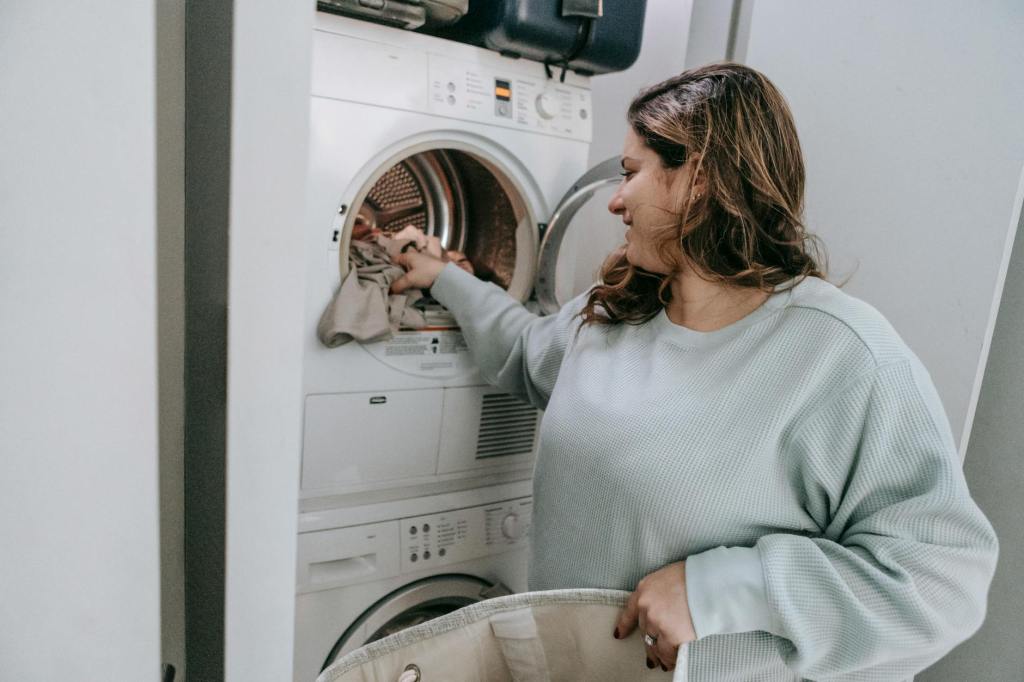
A washing machine cleans clothes by controlling three engineered processes: measured water intake, controlled mechanical motion, and forced drainage. Understanding how a washing machine fills, spins, and drains step by step explains cleaning performance, energy use, and the root causes of common failures. This guide provides a complete washing machine cycle explained from fill to drain.
You’ll learn:
- How washers measure and control water levels
- The physics behind agitation and spin extraction
- How drainage systems actively remove wastewater
- Why machines fail to spin or drain correctly
- How sensors and control systems coordinate the entire cycle
Before exploring system mechanics, let’s start with a simple mental model.
Washing Machine Operation Explained Like You’re 5
A washing machine performs four controlled actions:
Fill → water enters the drum
Wash → clothes move through soapy water
Spin → water is forced out of fabric
Drain → dirty water is pumped away
That’s the simple explanation of how washing machines work.
But inside the machine, each step is measured, timed, and regulated by sensors and mechanical systems designed for efficiency and fabric protection.
What Controls Filling, Spinning, and Draining?
Modern washers are automated fluid-handling and motion-control systems. Each stage depends on dedicated components that operate under electronic control.
Water Intake System
Water enters only when the control system allows it.
Key components
- Inlet valve — electrically opens to admit water
- Pressure switch (water level sensor) — detects fill height
- Control board — regulates timing and volume
As water rises in the tub, air pressure in a sensing tube increases. Once the calibrated level is reached, the control system shuts the inlet valve. This prevents overfilling and ensures consistent wash chemistry.
Wash and Spin Mechanism
This system converts electrical energy into controlled motion.
Primary elements
- Drive motor — provides rotational force
- Drum or inner basket — holds the load
- Belt or direct-drive coupling — transfers motion
- Suspension assembly — stabilizes high-speed rotation
The same motor operates at low torque for washing and extremely high speed for spinning. This controlled speed transition is essential for both cleaning and water extraction.
Drainage System
Washing machines do not rely on gravity alone. They actively pump water out.
Core components
- Drain pump — creates pressure to expel water
- Drain hose — carries wastewater away
- Debris filter — protects the pump
- Cycle controller — coordinates timing
This integrated mechanism is responsible for how a washing machine drains water automatically.
The Engineering Behind Washer Cycles
Washing machines operate using fluid dynamics, mechanical force, and automated feedback control.
Water Fill Mechanics
Water enters through a solenoid valve controlled by the electronic control board. The pressure sensor continuously measures water level using air compression in a sensing tube. When the target level is reached, the system closes the valve.
This feedback loop ensures repeatable washing conditions regardless of load size or water pressure variation.
Agitation and Cleaning Physics
Cleaning is a controlled energy transfer process.
Four forces remove soil from fabric:
- Mechanical movement loosens particles
- Detergent reduces surface tension
- Water carries suspended dirt away
- Fabric friction enhances separation
Front-load machines tumble clothes through water, while top-load machines use agitation or impeller motion. Both methods create controlled turbulence that dislodges contaminants without excessive wear.
Spin Cycle Mechanics
The spin cycle extracts water using centrifugal force.
As rotational speed increases:
- Water is forced outward from fabric fibers
- It passes through drum perforations
- A drain pump removes expelled water
This explains why a washing machine spins so fast — higher rotational speed produces exponentially greater outward force, dramatically improving moisture removal.
The suspension system counters vibration by isolating drum movement from the outer cabinet.
Drainage System Operation
Drainage is a pressure-driven process.
- The control system activates the drain pump
- The pump creates a pressure differential
- Water moves through the drain hose
- Sensors confirm removal before spinning begins
Without this forced removal, water would remain trapped inside the drum.
How a Washing Machine Works Step by Step
Step 1 — Controlled Water Fill
- Inlet valve opens
- Pressure sensor monitors level
- Filling stops at calibrated volume
Water volume directly influences cleaning efficiency and fabric movement.
Step 2 — Wash Phase
- Drum agitates or tumbles
- Detergent activates chemical cleaning
- Soil separates from fabric
Mechanical energy and chemistry work together to remove contaminants.
Step 3 — Primary Drain
- Pump activates
- Dirty wash water is expelled
- Drum empties completely
This prepares the load for rinsing.
Step 4 — Rinse Cycle
- Fresh water enters
- Clothes move to remove detergent residue
- Water drains again
Residue removal prevents fabric stiffness and skin irritation.
Step 5 — Final Spin Extraction
- Drum accelerates to high speed
- Centrifugal force removes moisture
- Pump evacuates remaining water
Clothes emerge damp but significantly dewatered, reducing drying energy.
Everyday Washer Behavior Explained
Heavy Load of Towels
Towels retain large volumes of water, increasing system demand.
Machine response:
- Higher water level required
- Longer spin extraction needed
- Greater vibration control required
This is why towel cycles run longer than standard loads.
Machine Fails to Drain
If water remains after washing, common causes include:
- Obstructed pump filter
- Kinked or blocked drain hose
- Pump motor failure
So what happens if a washing machine cannot drain?
- Water remains in the drum
- Spin cycle is disabled
- Clothes remain saturated
The machine prevents spinning to avoid motor overload and structural stress.
High-Speed Spin Efficiency
A higher spin speed produces measurable outcomes:
- Greater moisture removal
- Reduced drying time
- Lower total energy consumption
However, higher speeds increase mechanical load on bearings and suspension components.
When Washing Machines Reach Their Limits
Modern washers include protective logic to prevent damage.
Overfill Protection
If water exceeds safe levels:
- Intake valve closes
- Pump may activate
- Cycle pauses
This prevents overflow and structural stress.
Drain Failure Protection
If water cannot be removed:
- Spin cycle may be cancelled
- Error codes appear
- System enters safe mode
Protection prevents component damage.
Load Imbalance Detection
Uneven weight distribution causes instability during high-speed rotation.
System response:
- Drum slows
- Load is redistributed
- Spin resumes when balanced
This prevents excessive vibration and bearing failure.
Washing Machine Myths vs Reality
Myth: The spin cycle dries clothes completely
Reality: Spin removes water mechanically; drying requires heat evaporation.
Myth: More water cleans better
Reality: Correct water level improves mechanical action and detergent efficiency.
Myth: Washing machines drain by gravity
Reality: A powered pump actively removes water.
Myth: Faster spin improves cleaning
Reality: Spin affects drying efficiency, not cleaning performance.
Myth: All washers operate identically
Reality: Front-load and top-load systems use different cleaning mechanics.
FAQ
How does a washing machine fill with water automatically?
A washing machine fills through an electronically controlled inlet valve. A pressure sensor measures water level inside the drum. When the programmed level is reached, the control system closes the valve automatically to prevent overfilling and maintain consistent washing conditions.
How does a washing machine spin clothes dry?
During the spin cycle, the drum rotates at high speed, generating centrifugal force that pushes water outward from fabric fibers. This expelled water passes through drum holes and is removed by the drain pump, significantly reducing moisture before drying.
How does a washing machine drain water automatically?
A washing machine drains water using an electric pump that creates pressure to push wastewater through a drain hose. The control system activates the pump at specific points in the cycle to ensure complete removal before rinsing or spinning begins.
Why does a washing machine spin so fast?
High rotational speed produces strong centrifugal force, which efficiently extracts water from fabric. Faster spinning reduces drying time and energy use while maintaining system stability through suspension control and load balancing.
What happens if a washing machine cannot drain?
If a washer cannot drain, water remains in the drum and the spin cycle is typically disabled. Clothes stay wet and the machine may display an error. Common causes include pump blockages, hose obstructions, or drain pump failure.
Key Takeaways
A washing machine is a controlled fluid and motion system designed for efficient cleaning.
- Washers operate through a fill → wash → drain → spin sequence
- Sensors regulate water level and cycle timing
- Spin cycles remove water using centrifugal force
- Drain pumps actively remove wastewater
- Most performance issues result from blockages, imbalance, or sensor faults
Understanding the full washing machine cycle explained from fill to drain allows accurate troubleshooting and better appliance care.
Continue Learning
Want to understand your home systems more deeply?
→ Learn how household water pressure systems function
→ Read: How Home Plumbing Systems Work Step by Step
→ Explore: Beginner Guide to HVAC Systems
Understanding how your appliances work internally helps you diagnose problems early, extend equipment lifespan, and make informed upgrade decisions.

 Simply How
Leave a comment