Low water pressure is not a single failure — it is a symptom. It occurs when water cannot move through the supply or plumbing system efficiently due to restriction, loss of force, or regulation failure. Learning how to diagnose low water pressure in house step by step ensures you fix the cause rather than the symptom.
It also helps explain what causes sudden low water pressure in a house and why a home may have low water pressure everywhere.
In this guide, you’ll learn:
- How to identify where pressure loss occurs
- How to distinguish supply problems from plumbing failures
- How to measure pressure correctly
- Which components most often fail
- When professional repair is justified
We’ll start with a simple model, then move into system physics and practical diagnostics.
Low Water Pressure Explained Like You’re 5
Think of your plumbing system as a straw.
- Water = the drink
- Pressure = how hard you blow
- Blockage = a pinch in the straw
If the straw is squeezed, water still exists — but it can’t move freely. Pipes behave the same way.
Here’s the simple explanation of low water pressure causes:
- Water must be pushed through pipes
- Any restriction reduces movement
- The restriction can occur before water enters the house or inside it
- Diagnosis means locating the “pinch”
Core principle: pressure drops when resistance increases.
How Household Water Pressure Systems Work
Understanding how pressure is created and lost makes diagnosis logical rather than guesswork.
Pressure Source
Water pressure originates outside the home from either:
- Municipal distribution systems
- Private well pump systems
Two pressure states exist:
- Static pressure — water at rest in pipes
- Dynamic pressure — water moving under demand
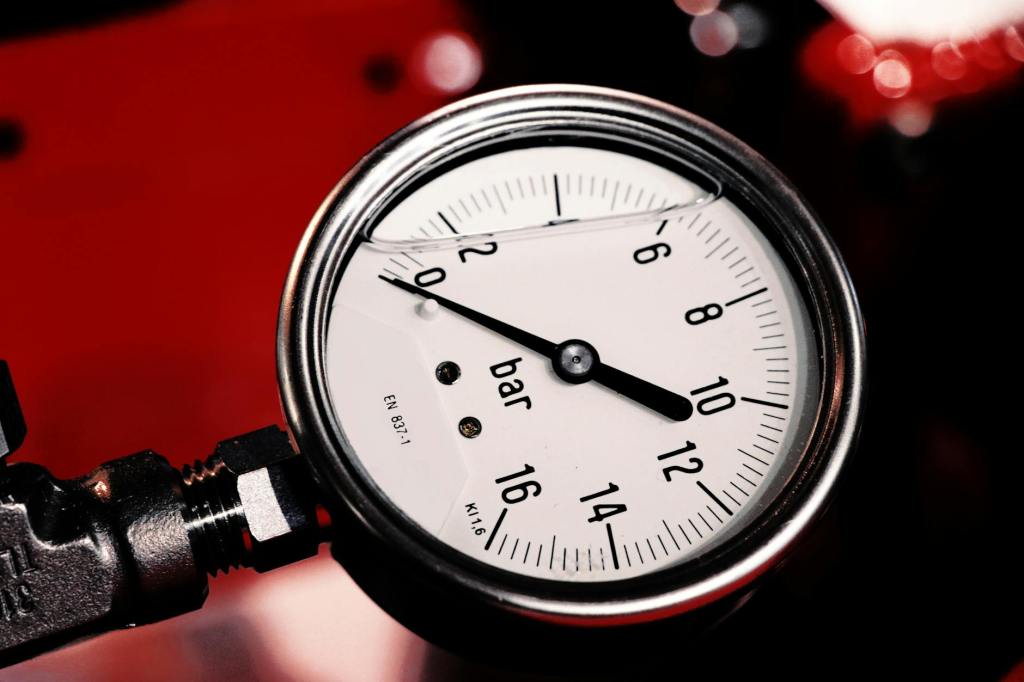
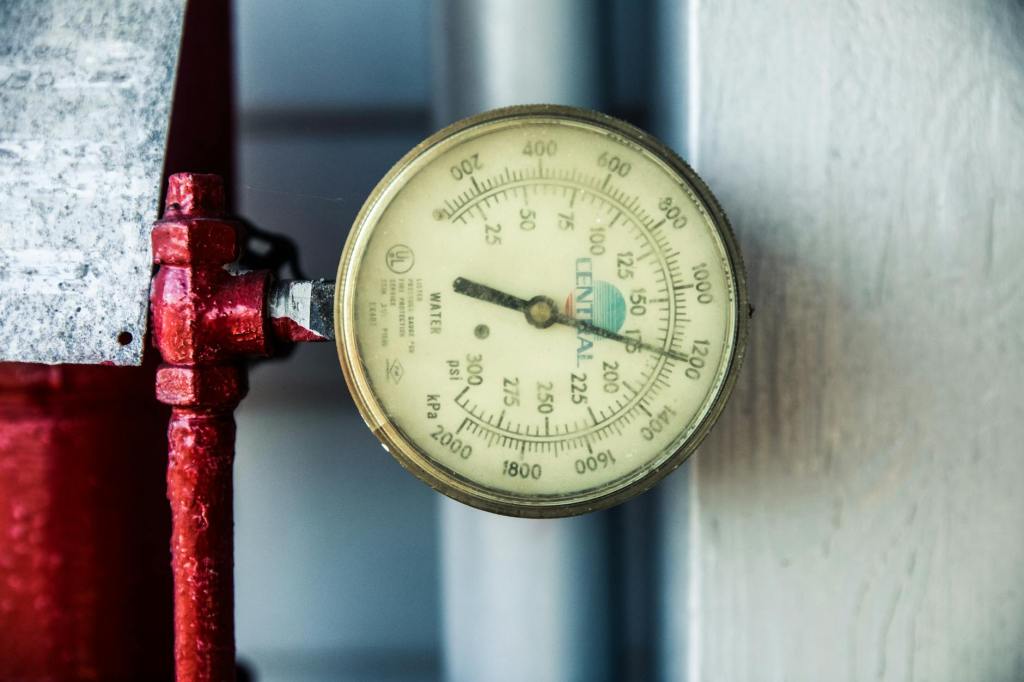
Normal residential pressure is 40–60 PSI.
Below this range, fixtures and appliances begin to underperform.
Pressure Regulation
Most homes include a pressure-reducing valve (PRV) near the main shutoff.
Its job is to:
- Stabilize incoming pressure
- Protect plumbing from excess force
- Maintain consistent delivery
When a regulator fails, it typically causes:
- Gradual pressure decline
- Sudden system-wide drop
- Fluctuating performance
A failing regulator is one of the most common whole-house pressure failures.
Distribution System Behavior
After water enters the home, pressure is governed by basic fluid dynamics.
Pressure decreases due to:
- Pipe wall friction
- Vertical elevation changes
- Simultaneous demand
- Pipe diameter restrictions
This explains the difference between low water pressure vs low water flow:
- Pressure = force pushing water
- Flow = amount of water delivered
A system can have normal pressure but poor flow if movement is restricted.
Common Failure Points
Pressure problems tend to originate in predictable locations:
- Mineral-clogged aerators
- Scale buildup inside pipes
- Partially closed valves
- Hidden leaks
- Failing pressure regulator
- Restricted supply line
With system mechanics understood, diagnosis becomes structured and efficient.
How to Diagnose Low Water Pressure at Home
Follow this sequence. Each step eliminates a category of causes.
Step 1 — Determine the Scope
Identify where the problem exists:
- One fixture or entire house
- Hot water only or both hot and cold
- Sudden change or gradual decline
This distinction immediately separates localized restrictions from system-wide failures.
Step 2 — Rule Out External Causes
Before inspecting plumbing, confirm water is entering the home properly.
Check:
- Main shutoff valve fully open
- Fixture valves fully open
- Visible leaks indoors or outdoors
- Neighborhood supply issues
External causes account for a significant percentage of pressure complaints.
Step 3 — Test Fixtures Individually
Compare water performance between locations.
Inspect:
- Remove and rinse faucet aerators
- Check showerheads for mineral buildup
- Compare pressure at multiple fixtures
If only one fixture is affected, the issue is local — not systemic.
Step 4 — Measure Water Pressure
Measurement converts observation into diagnosis.
How to test:
- Attach a pressure gauge to an outdoor hose bib
- Record static pressure (no water running)
- Record dynamic pressure (water flowing)
Interpretation:
- 40–60 PSI static → normal supply
- Low static pressure → supply or regulator issue
- Sharp drop under use → restriction or undersized piping
Pressure measurement is the single most reliable diagnostic step.
Step 5 — Inspect the Pressure Regulator
If pressure is low everywhere, inspect the PRV.
Indicators of regulator failure:
- Uniformly weak pressure across fixtures
- Random pressure fluctuations
- Sudden performance change without plumbing work
Regulators wear internally and drift out of calibration over time.
Step 6 — Evaluate Pipe Condition
Pipe condition directly determines pressure delivery efficiency.
Common issues:
- Galvanized pipes narrowing internally
- Mineral scale reducing internal diameter
- Undersized service lines
Restriction increases friction, which reduces effective pressure at fixtures.
Step 7 — Check for Hidden Leaks
Leaks reduce available pressure by diverting water.
Detection method:
- Turn off all fixtures
- Observe water meter movement
- Monitor pressure stability
Unexplained water movement indicates loss within the system.
Diagnostic Checklist
✔ Problem location identified
✔ External supply verified
✔ Fixtures tested
✔ Pressure measured
✔ Regulator inspected
✔ Pipe condition evaluated
✔ Leak test completed
This structured process isolates the cause efficiently.
Common Low Water Pressure Scenarios
Low Pressure Everywhere
Typical causes:
- Failing pressure regulator
- Supply line restriction
- Municipal pressure issue
- Main service line obstruction
When all fixtures are affected, the cause is near the water entry point.
Weak Pressure in One Fixture
Typical causes:
- Clogged aerator
- Local valve restriction
- Fixture cartridge failure
Localized issues rarely require major plumbing work.
Pressure Drops When Multiple Fixtures Run
Explanation:
- System demand exceeds delivery capacity
- Pipe diameter limitation
- Normal dynamic pressure behavior
This is often a design limitation rather than a defect.
Sudden Pressure Loss
Homeowners often ask what causes sudden low water pressure in a house.
Most common reasons:
- Pipe leak
- Valve movement
- Regulator failure
- Supply interruption
Sudden changes typically indicate mechanical failure rather than gradual buildup.
What Happens When Pressure Is Too Low
Low pressure affects more than comfort — it affects system performance.
Consequences include:
- Weak showers
- Slow appliance filling
- Reduced water heater efficiency
- Extended heating time
- Possible air intrusion into pipes
Persistent low pressure should be diagnosed promptly to prevent system stress.
Low Water Pressure Myths vs Reality
Myth: Low pressure always means a leak
Reality: Restrictions occur more frequently.
Myth: Increasing pump size fixes everything
Reality: Restrictions must be removed first.
Myth: Low pressure equals low flow
Reality: Force and volume are different properties.
Myth: Problems start inside the home
Reality: Supply-side issues are common.
Myth: Older homes always have low pressure
Reality: Pipe condition matters more than age.
Correct diagnosis prevents unnecessary repairs and replacements.
FAQ — Featured Snippet Optimized
How do you diagnose low water pressure in a house?
Diagnosing low water pressure involves identifying whether the issue affects one fixture or the entire house, checking valves and aerators, measuring pressure with a gauge, inspecting the pressure regulator, evaluating pipe condition, and testing for leaks. A systematic process isolates where pressure loss occurs.
What causes sudden low water pressure in a house?
Sudden low water pressure is typically caused by a pipe leak, failing pressure regulator, partially closed valve, or interruption in the external water supply. Rapid system changes usually indicate mechanical failure rather than gradual mineral buildup or aging pipes.
Why does my house have low water pressure everywhere?
Whole-house low water pressure usually results from a failing pressure regulator, restricted main supply line, municipal pressure issue, or significant plumbing leak. When all fixtures are affected equally, the cause is typically located near the main water entry point.
What happens if home water pressure is too low?
Low water pressure reduces fixture performance, slows appliance operation, weakens shower flow, and increases water heating time. Severe pressure loss can allow air to enter plumbing lines, which disrupts water delivery and affects overall system stability.
Low water pressure vs low water flow — what’s the difference?
Water pressure is the force pushing water through pipes, while water flow is the volume delivered over time. A system may have adequate pressure but poor flow if blockages, mineral buildup, or pipe restrictions limit water movement.
Key Takeaways
Diagnosing low water pressure at home step by step follows a predictable logic:
- Low pressure is a symptom, not a single failure
- Accurate diagnosis requires measurement
- Restrictions and regulation failures are common causes
- Systematic inspection prevents unnecessary repairs
- Understanding system physics speeds troubleshooting
When you understand how pressure is created, controlled, and lost, diagnosis becomes straightforward.
Continue Learning About Home Systems
To build a deeper understanding of your home’s water systems:
→ Learn how household water pressure systems function
→ Read: How Home Plumbing Systems Work Step by Step
→ Explore: Home Water Filtration Systems Explained
Understanding how water moves through your home helps you identify problems early, maintain system efficiency, and make informed upgrade decisions.

 Simply How
Leave a comment